



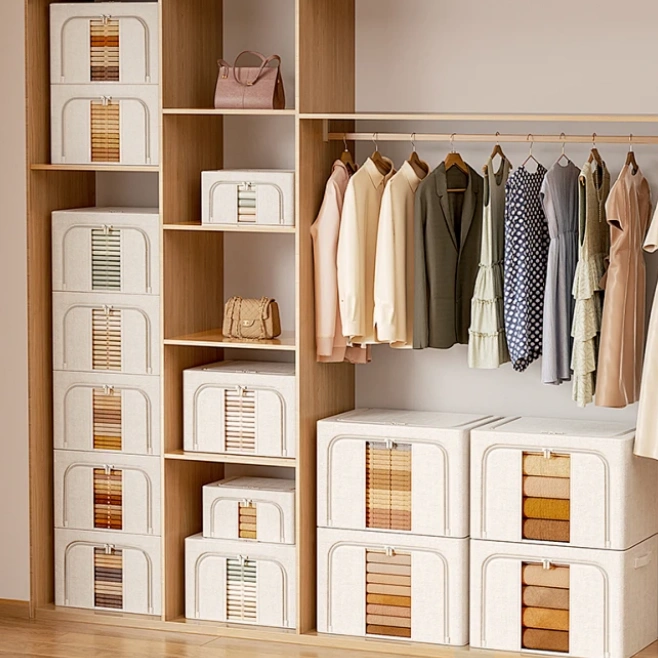
Are you tired of cluttered closets, messy shelves, and disorganized belongings? Look no further than storage boxes-these versatile solutions are essential for tidying up any space. Among all storage box types, foldable cloth storage boxes stand out for their flexibility and practicality, but many users worry about their weight-bearing capacity. As a seasoned storage box manufacturer specializing in home essentials like quilt bags and storage boxes, we're here to break down how to boost the load-bearing ability of foldable cloth storage boxes, plus why they're a better choice than other storage box options.
Foldable Cloth Storage Box: Why It Outshines Other Storage Box Types
Before diving into weight-bearing upgrades, let's first clarify why foldable cloth storage boxes are a top pick for homes-especially when compared to other common storage box types. For a storage box manufacturer focused on user needs, understanding these advantages is key to optimizing product design.
Advantages of Foldable Cloth Storage Boxes
● Space-saving flexibility: Unlike rigid storage boxes, foldable cloth versions can be flattened when not in use, taking up minimal space in cabinets or under beds. This is a game-changer for small apartments or seasonal storage needs.
● Gentle on belongings: Made of soft fabric, these storage boxes won't scratch delicate items like sweaters, quilts, or children's toys-something hard plastic or metal storage boxes can't match.
● Aesthetic versatility: Foldable cloth storage boxes come in various colors, patterns, and textures, blending seamlessly with home decor. They can be placed directly on open shelves without looking clunky, unlike cardboard or wooden storage boxes.
Shortcomings of Other Storage Box Types
● Plastic storage boxes: While durable and waterproof, they are rigid and can't be folded-wasting space when empty. They also tend to crack in low temperatures, and their opaque design makes it hard to see contents without opening.
● Cardboard storage boxes: Lightweight and cheap, but they are prone to moisture damage (e.g., mold in humid closets) and tear easily under even moderate weight. They're only suitable for short-term, light storage, not long-term use.
● Wooden storage boxes: Aesthetically pleasing but heavy and bulky-moving them around is a hassle. They also absorb moisture, leading to warping over time, and their rigid structure means they can't adapt to tight spaces.
● Metal storage boxes: Durable and fire-resistant, but they're cold to the touch, scratch floors, and are too industrial-looking for most home environments. They're better suited for garages or warehouses, not bedrooms or living rooms.
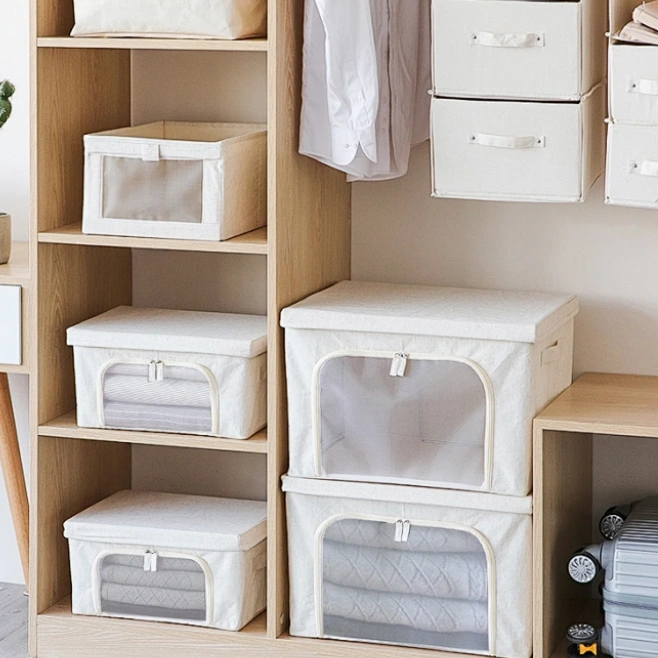
Key Materials for Foldable Cloth Storage Box: The Foundation of Weight-Bearing
The weight-bearing capacity of a foldable cloth storage box starts with its materials. A professional storage box manufacturer knows that choosing the right fabrics and reinforcements is non-negotiable for durability. Here are the core materials that make these storage boxes stronger:
Outer fabric: High-density, wear-resistant textilesThe outer layer must withstand friction and weight. Top choices include:
● Oxford cloth: Thick, tear-resistant, and water-repellent. It's ideal for storing heavy items like books or winter blankets, as it won't stretch or rip under pressure.
● Cotton-linen blend: Breathable and soft, but we reinforce it with a polyester coating for added strength. This blend works well for medium-weight items like clothing or accessories.
● Nylon: Lightweight yet extremely durable, with high tensile strength. It's often used for foldable cloth storage boxes designed for travel or outdoor use.
Inner support: Rigid but flexible linersSoft fabric alone can't hold shape under weight-so we add inner liners to maintain structure:
● Thickened PP boards: Non-toxic, moisture-proof, and rigid enough to support the sides and bottom of the storage box. They're foldable (when scored properly) and won't break easily.
● Cardboard with waterproof coating: For entry-level foldable cloth storage boxes, we use coated cardboard to prevent moisture damage. It's lighter than PP boards but still provides solid support for light to medium weight.
● Reinforcements: Details that boost load-bearingAs a storage box manufacturer, we pay close attention to small but critical details:
● Double-stitched seams: All edges (especially the bottom and handles) are sewn twice to prevent splitting when lifting heavy contents.
● Reinforced bottom patches: We add an extra layer of fabric or a PP board insert to the bottom-this is where most weight rests, so strengthening it directly increases overall load capacity.
Sturdy handles: Handles are attached with metal rivets or cross-stitching, ensuring they don't pull off when carrying the storage box.
How to Enhance Weight-Bearing Capacity of Foldable Cloth Storage Box: Tips from a Professional Storage Box Manufacturer
Choosing good materials is the first step-next, we optimize design and craftsmanship to make foldable cloth storage boxes even more weight-resistant. Here's how we do it at our factory:
Optimize the structure design
● Wider bottom area: A larger base distributes weight more evenly, reducing pressure on any single point. We design most foldable cloth storage boxes with a square or rectangular base (rather than narrow shapes) for better stability.
● Tall, straight sides: Sides that stay upright (thanks to rigid liners) prevent contents from sagging outward, which can cause the fabric to stretch or tear. We test side rigidity by placing weight on top and checking for deformation.
● Corner reinforcement: We add extra fabric or plastic corner guards to the top edges-this prevents fraying and adds support when stacking storage boxes (yes, well-designed foldable cloth storage boxes can be stacked!).
Upgrade manufacturing processes
● High-strength thread: We use polyester thread instead of cotton thread, as it has higher tensile strength and won't break under tension.
● Heat-sealing for waterproof fabrics: For Oxford cloth or nylon storage boxes, we heat-seal the seams (in addition to stitching) to make them more durable and prevent water from seeping in-this also strengthens the seam structure.
● Load-testing before shipping: Every batch of foldable cloth storage boxes goes through a weight test. We place a specified weight (usually 5–10kg, depending on the model) inside and leave it for 24 hours to check for sagging, stitching damage, or liner breakage.
● Customize for heavy-duty needs:For customers who need foldable cloth storage boxes for extra-heavy items (like tools or large blankets), our storage box manufacturer team offers customizations:
● Thicker PP boards (2mm instead of 1mm) for inner support.
● Double-layer outer fabric (e.g., Oxford cloth + cotton-linen blend) for maximum wear resistance.
● Metal frame inserts (lightweight aluminum) for the sides-this turns the foldable storage box into a semi-rigid container that can hold up to 15kg.
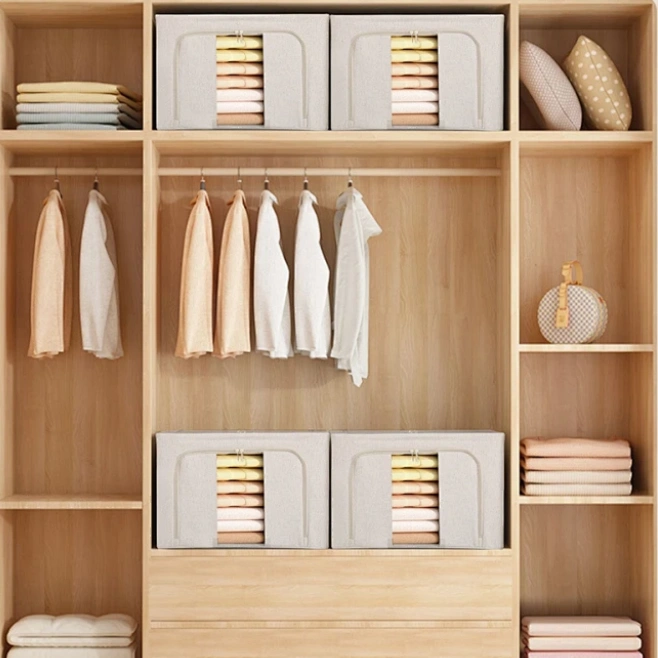
Practical Tips for Using Foldable Cloth Storage Box to Maintain Its Weight-Bearing Performance
Even the best-made foldable cloth storage box will wear out faster if used incorrectly. Here are tips to preserve its weight-bearing ability:
Distribute weight evenly: Don't pile all heavy items (like books) in one corner-spread them out to avoid putting too much pressure on a single spot.
Avoid overloading: Check the weight limit specified by the storage box manufacturer (usually printed on the tag) and don't exceed it. Overloading is the main cause of stretched fabric or broken seams.
Clean and dry regularly: If the storage box gets wet, dry it completely before use. Moisture can weaken fabric and damage inner cardboard liners, reducing weight-bearing capacity.
Store properly when not in use: Fold the storage box flat (following the manufacturer's guidelines) and keep it in a dry, cool place. Avoid crushing it under heavy items, as this can damage the inner support liners.
FAQ About Foldable Cloth Storage Boxes
Q1: How much weight can a high-quality foldable cloth storage box bear?A1: It depends on the materials and design, but a well-made one from a professional storage box manufacturer can typically bear 5–10kg for daily use. Heavy-duty models (with thick PP liners and double-layer fabric) can bear up to 15kg.
Q2: Can foldable cloth storage boxes be used in humid spaces like bathrooms or basements?A2: Yes, but choose models with waterproof outer fabric (like Oxford cloth) and moisture-proof inner liners (PP boards instead of cardboard). Avoid cardboard-lined storage boxes in humid areas, as they can mold or warp.
Q3: How do I choose a reliable foldable cloth storage box manufacturer?A3: Look for manufacturers that specify materials (e.g., "high-density Oxford cloth" instead of "fabric") and weight-bearing capacity. Check customer reviews for feedback on durability, and ask if they offer load-testing reports-reputable manufacturers will be transparent about product performance.
Q4: Can foldable cloth storage boxes be washed?A4: Most can be spot-cleaned with a damp cloth. Some cotton-linen blend models are machine-washable (on a gentle cycle), but always check the manufacturer's instructions-washing can damage inner PP liners if not done correctly.
As a storage box manufacturer focused on home organization solutions, we believe foldable cloth storage boxes are the perfect balance of practicality, flexibility, and durability-especially when optimized for weight-bearing. By choosing the right materials, refining design, and using them correctly, you can enjoy clutter-free spaces without worrying about your storage box failing under pressure.