




What is the best garment for suit?
With three decades of expertise in the home storage industry, our factory stands as a trusted
manufacturer specializing in garment bags, storage boxes, quilt bags, and a range of practical
home organization solutions. For over 30 years, we have dedicated ourselves to crafting a wide
array of garment bags-from lightweight travel options and heavy-duty storage designs to
specialized styles for suits, dresses, and delicate fabrics.Each type of garment bag we produce
is thoughtfully engineered to cater to diverse needs, meaning they vary in functionality, material,
and feature sets. Some excel in breathability for long-term clothing preservation, while others
prioritize waterproofing and durability for frequent travel or humid environments. Whether it's
cotton garment bags that offer gentle protection for premium fabrics or synthetic garment bags
designed for rugged use, our years of hands-on experience have allowed us to master the
nuances of each style-understanding not just their strengths, but also how to align their features
with real-world usage scenarios.If you're seeking the perfect garment bag that aligns with your
specific requirements-whether for personal use, business applications, or bulk orders-keep
reading.We'll share insider insights from a seasoned garment bag manufacturer, helping you
navigate theoptions and choose a product that delivers lasting value and performance.
Comparison of garment bags made of various materials
Below is a detailed English breakdown of the pros and cons of suit garment bags made from
non-woven fabric, PVC, PEVA, and polyester-tailored to highlight material-specific performance
for suit protection, aligned with a professional garment bag manufacturer's expertise:
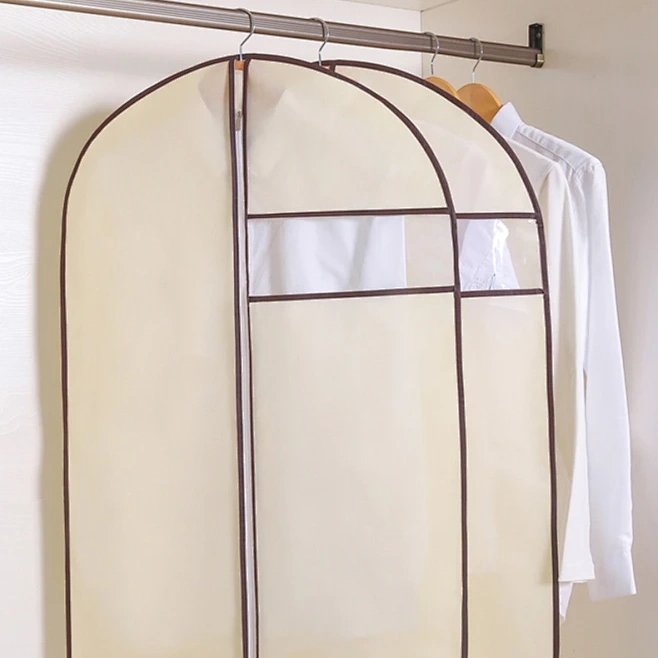
► PP Non Woven Garment Bag
Pros:
● Cost-effective: Ideal for budget-friendly bulk orders, making it a popular choice for garment bag
manufacturers targeting price-sensitive markets.
● Lightweight & foldable: Easy to store and transport, reducing shipping costs for both businesses
and consumers.
● Breathable: Natural air circulation prevents moisture buildup, keeping suits fresh during short-term
storage.
● Eco-friendly options: Biodegradable non-woven fabrics align with sustainable consumer demands,
lowering environmental impact.
● Soft texture: Gentle on delicate suit fabrics (e.g., wool, cashmere) without snagging or abrasion.
Cons:
● Limited durability: Less resistant to tearing, abrasion, and repeated use compared to synthetic
alternatives.
● Poor water resistance: Unaffected by water repellency, making it unsuitable for travel or humid
storage environments.
● Low structural stability: Prone to wrinkling and losing shape, offering minimal protection against
dust or external pressure
● Short lifespan: Degrades faster with frequent handling or washing, reducing long-term value.
► PVC Suit Garment Bags
Pros:
● Exceptional waterproofing: Seals out moisture, dust, and stains, making it perfect for travel or
humid storage (e.g., basements, coastal areas)
● High durability: Resistant to tearing, punctures, and wear, ensuring long-lasting protection for suits.
● Transparent visibility: Allows easy identification of suits without unzipping, enhancing convenience
for users.
● Rigid structure: Maintains shape to prevent suit creasing, offering structural support during storage
or transit.
● Cost-efficient: Balances affordability with functional performance, suitable for mass-market garment
bag production.
Cons:
● Poor breathability: Traps moisture and heat, risking mold, mildew, or musty odors for long-term suit
storage-especially harmful to natural fibers.
● Potential odor: May emit chemical fumes (due to plasticizers) that can irritate sensitive skin or
damage delicate fabrics over time.
● Environmental concerns: Non-biodegradable and derived from petroleum, conflicting with eco
-conscious consumer trends.
● Brittle in low temperatures: Prone to cracking or stiffening in cold conditions, limiting usability in harsh
climates.
● Abrasive surface: Uncoated PVC may scratch or fade suit fabrics with frequent contact.

► PEVA (Polyethylene Vinyl Acetate) Suit Garment Bags
Pros:
● Eco-friendly & low-toxic: Chlorine-free formulation eliminates harmful emissions, making it
safe for sensitive fabrics and environmentally responsible.
● Waterproof & dustproof: Effectively shields suits from moisture, dirt, and spills-ideal for
travel and humid storage.
● Soft & flexible: Gentle on delicate suits (e.g., silk-blend, linen) without snagging, offering
better fabric compatibility than PVC.
● Cold-resistant: Remains flexible in low temperatures, avoiding brittleness or cracking during
winter storage/transport.
● Lightweight & easy to clean: Wipeable surface for quick maintenance, and foldable design
saves storage space.
Cons:
● Lower durability: Less tear-resistant than PVC or polyester, not suitable for heavy-duty or
frequent use.
● Limited structural support: Lacks rigidity, so suits may wrinkle if not properly hung or folded
within bag.
● Moderate breathability: Requires ventilation features (e.g., mesh panels) to prevent
moisture buildup during long-term storage.
● Susceptible to scratches: Surface can show scuffs over time, affecting aesthetic appeal.

►Polyester Suit Garment Bags
Pros:
● Superior durability: Highly resistant to tearing, abrasion, and wrinkles, making it a top choice
for long-term use and travel.
● Versatile performance: Can be engineered for waterproofing (with coatings) or breathability
(with mesh inserts/ventilation holes), balancing protection and air circulation.
● Easy maintenance: Machine-washable and quick-drying, retaining shape and functionality
after repeated cleaning.
● Lightweight yet sturdy: Offers structural support to prevent suit creasing while remaining
portable for travel.
● Colorfast & odor-resistant: Resists fading and doesn't emit chemical smells, ensuring
compatibility with all suit fabrics.
● Customizable: As a preferred material for garment bag manufacturers, polyester supports various
designs (e.g., padded compartments, zippered pockets) for enhanced usability.
Cons:
● Higher cost: More expensive than non-woven fabric or PEVA, targeting mid-to-high-end markets.
● Pure polyester lacks breathability: Unmodified polyester can trap moisture-requires breathable
design tweaks (e.g., mesh panels) for long-term suit storage.
● Less soft than natural fibers: May feel slightly rigid compared to cotton or PEVA, though coated
polyester can offer a softer touch.

Summary: Choosing the Right Material for Suit Garment Bags
As a seasoned garment bag manufacturer, we recommend selecting materials based on usage
scenarios, budget, and consumer priorities:
★ Budget & short-term storage: Non-woven fabric is ideal for cost-sensitive buyers, promotional
products, or temporary suit protection. Its breathability suits short-term use, but avoid humid or
high-wear environments.
★ Travel & humid conditions: PVC offers unbeatable waterproof/dustproof performance for transit
or harsh storage. However, opt for PEVA if eco-friendliness and low toxicity are key-PEVA balances
protection with safety but lacks PVC's durability.
★ Long-term use & premium markets: Polyester is the top choice for high-quality suit garment
bags.Its versatility, durability, and customizable features cater to mid-to-high-end consumers, travel
enthusiasts,and businesses seeking long-lasting value. Add breathable elements (e.g., mesh) to
address its natural breathability gap.
★ Eco-conscious buyers: Prioritize biodegradable non-woven fabric or PEVA, as both align with
sustainable trends without compromising core protection.
For bulk orders or customized suit garment bags, our factory can tailor material combinations
(e.g., polyester with mesh panels, PEVA-lined non-woven bags) to meet your specific market needs.